
Desalination
Seawater filtration is a crucial element in the desalination process, especially given the complexity of the impurities and salts present in brackish water. In this context, SATI filters stand out as a reliable and durable solution, thanks to their construction using high-quality materials such as Duplex, Super Duplex, and Titanium. These materials are essential for ensuring the corrosion and pressure resistance required in demanding marine environments.
SATI filtration systems, with their advanced technology, provide effective filtration that ensures the removal of unwanted particles, sediments, and contaminants from seawater. This process is essential for protecting desalination system components, such as osmotic membranes, from damage and contamination, thereby improving efficiency and extending the service life of the equipment.
The use of SATI filters in the desalination sector offers several advantages. First, their robustness and durability help reduce maintenance and replacement costs, ensuring the continuous and reliable operation of desalination systems. Furthermore, their ability to adapt to various operating conditions makes them suitable for a wide range of applications, from large-scale industrial plants to more compact desalination systems for domestic use or in small coastal communities.
The use of SATI filtration systems also helps improve the overall efficiency of desalination processes by reducing downtime and optimizing the performance of water treatment systems. This results in increased production of high-quality drinking water, which is crucial for meeting the water needs of coastal communities and arid regions, where desalination is essential for water supply.
In conclusion, the use of SATI filters made of Duplex, Super Duplex, and titanium in the seawater desalination sector represents a reliable, efficient, and sustainable solution for producing drinking water from marine sources. These filters represent a long-term investment in ensuring continuous and safe access to drinking water in areas where water resources are limited or compromised by salinity.
Water filtration plays a crucial role in the desalination industry in the process of converting seawater into usable drinking water. Desalination, which involves various technologies such as reverse osmosis and evaporation, requires effective pre-filtration to remove impurities, salts, and other substances present in seawater in order to produce safe, potable water.
The filtration systems used in desalination face unique challenges due to the high concentrations of salts and suspended solids in seawater. Therefore, it is essential to use advanced and robust filtration technologies designed to withstand harsh marine environments and ensure reliable performance over time.
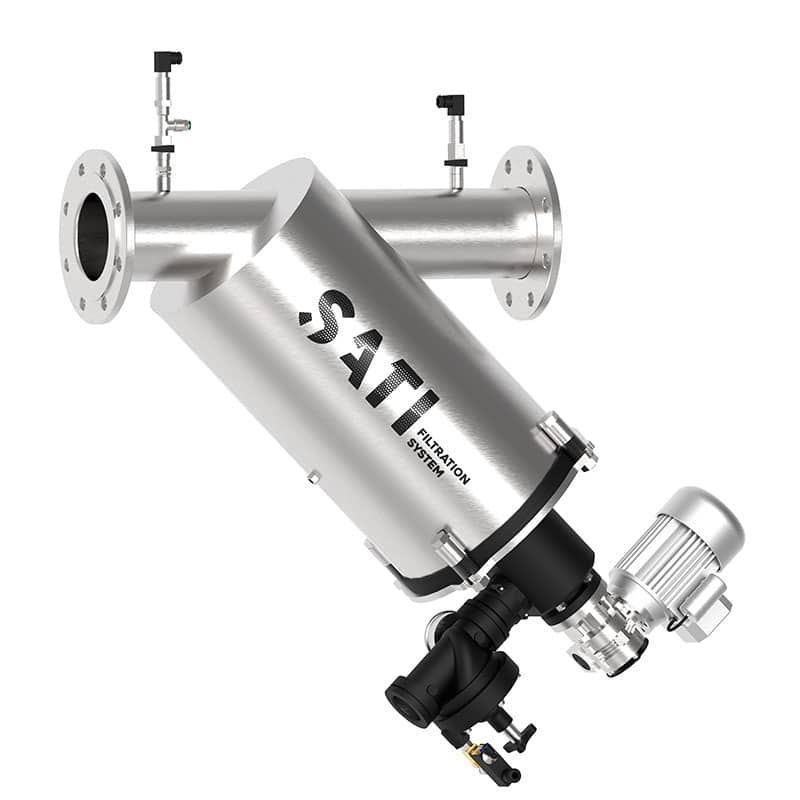


All filters can be customized to meet the customer's needs.
We also design custom filtration systems.
A major city in southern Italy needs to produce drinking water from seawater. To ensure the required water supply, it is essential to build a desalination plant. The water to be desalinated must first be filtered to remove sand, algae, and biological contaminants before passing through the reverse osmosis stage.
Location
ItalyFiltration grade
50 µmFlow rate
700 m3/h (24/7)Treated water
Brackish waterFor this successful project, SATI considers the use of AISI 316L material for the filtration system to be essential, given that brackish water, with its high salinity, is highly corrosive. The system consists of two filtration stages: the first, using five Vortex hydrocyclone filters, is designed to remove sand; the second, on the other hand, comprises four Rotor HP filters.
Thanks to their patented suction-pad cleaning system, these filters effectively remove colloidal dirt and algae. After pre-filtration by the SATI filters, the water is directed into a reverse osmosis system.


The PDF for this case study
is available only to registered users of the site.
Contact us
HEADQUARTERS
116 Via M. Galli
47522 Cesena (FC) – Italy
CALL US
Tel. +39 0547 660307
Company certified to UNI EN ISO 9001:2015